
Water Damage Restoration
Fast Water Damage Cleanup, Drying and Restoration.
Mold Solutions Home Services provides professional water damage restoration for homes and businesses throughout Cobb County, Paulding County, and surrounding Metro Atlanta communities.
We identify the extent of the damage, remove unwanted water, locate hidden moisture, dry affected materials, and complete the cleanup and repairs needed to restore your property after leaks, flooding, burst pipes, appliance failures, storm damage, and sewage backups.
- Water extraction and moisture detection
- Structural drying and cleanup
- Restoration and related repairs
Why Fast Action Matters
Water Damage Can Get Worse Quickly
Water rarely stays where you can see it. It can move underneath flooring, soak into drywall, enter wall cavities, and reach other porous building materials.
Without proper water extraction and structural drying, trapped moisture can continue affecting your property long after the visible water is gone.
The sooner drying begins, the better. Prompt inspection, water removal, and structural drying can help limit secondary damage and reduce the amount of restoration that may be needed.
Trapped moisture can contribute to:
- Damaged drywall and insulation
- Swollen or deteriorated flooring
- Damage to trim and building materials
- Elevated indoor humidity
- Unpleasant odors
- Mold and microbial growth
- More extensive repairs
What Causes Water Damage?
Common Causes of Water Damage
Water damage can result from a sudden emergency or a problem that develops gradually. Mold Solutions Home Services provides water damage cleanup and restoration for plumbing failures, flooding, appliance leaks, storms, sewage backups, and other sources of unwanted water.
Plumbing Problems
Broken and burst pipes, plumbing leaks, and overflowing sinks, tubs, and toilets.
Water Heater Failures
Leaking or failed water heaters can release significant amounts of water into surrounding rooms and building materials.
Appliance Leaks
Washing machines, dishwashers, refrigerators, and their water supply lines can leak suddenly or slowly over time.
Basement & Crawl Space Water
Flooding, drainage problems, groundwater, and other moisture intrusion can affect lower areas of the property.
Storm & Roof Leaks
Heavy rain, storm runoff, roof damage, and exterior water intrusion can allow moisture into walls, ceilings, and other materials.
Sewage Backups
Sewage incidents require attention to both the water damage and the contamination affecting the property.
Our Process
Our Water Damage Restoration Process
Every water damage project is different, but the overall process follows a clear path: inspect the damage, remove unwanted water, dry the structure, address damaged or contaminated materials, handle mold concerns when necessary, and complete the repairs needed to restore the property.
Step One
Inspection and Damage Assessment
Every project starts by determining what happened and which areas of the property have been affected.
Our technicians inspect the property, establish the scope of work, and determine what needs to be extracted, dried, cleaned, removed, or repaired. Once the scope has been established, you will receive an estimate before work moves forward.
We offer free estimates for water damage, water extraction, and water and sewage cleanup and repair.
Step Two
Water Extraction
Standing water and excess moisture need to be removed as quickly as practical.
Professional water extraction removes bulk water from affected areas so the structural drying process can begin. Depending on the loss, this may include water removal from flooring, rooms, basements, crawl spaces, and other affected areas.
Removing water promptly also helps reduce the opportunity for moisture to continue migrating into surrounding building materials.
Step Three
Structural Drying and Dehumidification
A surface that feels dry is not necessarily dry underneath.
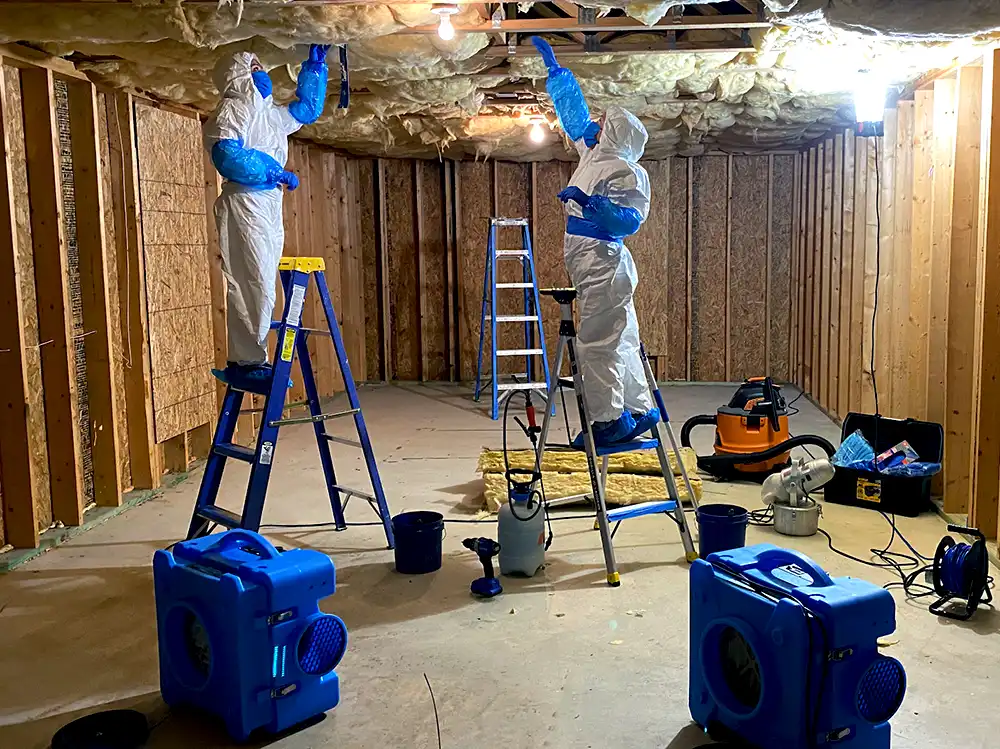
After water extraction, professional drying equipment may be installed to remove moisture retained within the structure and control humidity inside the affected area.
Drying Equipment
Equipment Used During Water Damage Restoration
Air Movers
Air movers create high-volume airflow across wet surfaces to accelerate evaporation and support the drying process.
Dehumidifiers
Dehumidifiers remove moisture from the air as wet building materials release water through evaporation, helping control humidity and keep drying moving efficiently.
Air Scrubbers & Filtration
Portable air filtration equipment may be used when appropriate to capture airborne particles and help maintain cleaner air during remediation and restoration work.
Step Four
Cleaning, Removal and Remediation
Some materials can be dried and restored. Others may need to be removed because of deterioration, damage, or contamination.
The scope of work can include cleaning affected areas, removing damaged materials, addressing contamination, and preparing the property for repairs.
When sewage or other contaminated water is involved, additional cleaning and remediation procedures may be necessary.
Step Five
Mold Prevention and Remediation
Water damage and mold problems often go hand in hand because mold growth depends heavily on moisture.
Our experience with mold inspection and remediation allows us to look beyond the visible water damage and consider moisture conditions that could contribute to future mold problems.
When mold remediation is necessary, Mold Solutions Home Services follows IICRC S520 protocols for professional mold remediation. Depending on the situation, services can include containment, removal of affected materials, cleaning, air filtration, and other measures appropriate to the conditions found at the property.
Our goal is not simply to clean visible mold. We work to identify and address the moisture conditions contributing to the problem.
Step Six
Water Damage Repairs
Water damage restoration may require more than extraction and drying.
Once affected areas have been properly addressed, repairs can begin. Depending on the damage, the project may include sheetrock and other repairs necessary to restore affected portions of the property.
Our goal is to manage the job from the initial assessment through the work necessary to get your home or business back in order.
Understanding the Difference
Water Mitigation vs. Water Damage Restoration
These terms are often used interchangeably, but they describe different parts of the recovery process. A significant water loss may require both.
Immediate Response
Water Mitigation
Water mitigation focuses on limiting the immediate damage. The goal is to control the active problem, remove unwanted water, and begin stabilizing the affected areas.
- Stop or control continued water intrusion
- Extract standing water
- Remove materials that cannot be saved
- Begin structural drying
Recovery & Repair
Water Damage Restoration
Water damage restoration takes the process further. Once the immediate water problem has been controlled, restoration addresses the drying, cleanup, and repairs required to return damaged areas to usable condition.
- Continue drying affected materials
- Clean and prepare damaged areas
- Address remaining moisture or contamination
- Complete necessary repairs
Many water damage projects require both. Mitigation controls the immediate problem and helps prevent additional damage, while restoration addresses the damage that remains afterward.
Contaminated Water
Sewage Cleanup and Water Damage Repair
A sewage backup requires a different approach than a clean-water plumbing leak.
Sewage can introduce contaminants into flooring, drywall, insulation, and other building materials. Simply extracting the visible water does not address the entire problem.
The affected area may need to be evaluated for both contamination and retained moisture before cleanup, drying, and repairs can move forward.
Mold Solutions Home Services offers free water and sewage cleanup and repair estimates so you can understand the scope of the problem before moving forward.
Professional sewage cleanup may involve:
- Water and sewage extraction
- Identification of contaminated materials
- Removal of materials that cannot be safely restored
- Cleaning and decontamination
- Structural drying
- Odor control
- Repairs to damaged areas
Hidden Moisture Matters
Water Damage and Mold
One of the biggest concerns following water damage is moisture that remains hidden after the obvious water is gone.
Drywall, wood, flooring, insulation, and other building materials can retain moisture below the surface. If those materials remain damp, they can create conditions that support mold growth.
That is why effective water damage restoration needs to address both the water you can see and the moisture you cannot.
Our team can determine whether additional mold assessment or remediation is appropriate and includes professionals with certifications related to residential and commercial mold inspection and mold remediation.
Water You Can See
Standing water, wet flooring, stained drywall, leaking fixtures, or obvious flooding may reveal only part of the affected area.
Moisture You Cannot See
Water may remain beneath flooring, behind drywall, inside wall cavities, or within porous structural materials.
Conditions for Mold Growth
Persistent moisture can create an environment that supports mold growth and may require additional inspection or remediation.
Water Damage Restoration
Restoration for Homes and Businesses
The needs of a home and a commercial property are different, but both require a clear assessment of the damage and a plan for extraction, drying, cleanup, and repairs.
For Homeowners
Residential Water Damage Restoration
Water damage can make part of your home unusable and disrupt your daily life.
Our residential water damage services are designed to move from the initial problem through cleanup and restoration as efficiently as possible.
Residential services may include:
- Water damage inspection
- Water extraction
- Basement water removal
- Crawl space drying
- Structural drying
- Dehumidification
- Air filtration
- Sewage cleanup
- Damaged material removal
- Mold inspection and remediation
- Sheetrock repair
- Water damage repairs
Throughout the project, we keep you informed about what we find, what needs to happen next, and why.
For Businesses
Commercial Water Damage Restoration
Water damage at a business creates another problem: downtime.
Mold Solutions Home Services provides water damage restoration for commercial properties throughout Cobb, Paulding, and surrounding counties.
Assess the Damage Inspect affected areas and determine how far the water has traveled.
Establish the Scope Identify what needs to be extracted, dried, cleaned, removed, remediated, or repaired.
Begin Restoration Develop and carry out the plan for water removal, drying, cleanup, remediation, and repairs.
The objective: address the water damage thoroughly while helping move your property toward normal operation as efficiently as conditions allow.
Insurance Coordination
Working With Your Insurance Company
A water damage insurance claim can involve the property owner, restoration contractor, insurance carrier, and adjuster. Clear communication between everyone involved can make the process easier to manage.
Mold Solutions Home Services works with you, your insurance carrier, and your adjuster to maintain communication and help move the restoration process forward.
We establish the scope of work, provide an estimate, and document the work being performed. While your insurance company ultimately determines what your policy covers, we can provide the restoration information needed to help you and your adjuster understand the damage and necessary work.
Coverage decisions are made by your insurance carrier according to your individual policy.
Complete Restoration Support
Why Choose Mold Solutions Home Services?
Water damage restoration requires more than putting a few fans in a room and waiting for things to dry. The real work is determining where the water traveled, which materials are affected, what can be saved, what needs to be removed, and whether retained moisture has created conditions for mold or other problems.
One Clear Process
From Initial Inspection Through Restoration
Our goal is to give you a clear scope of work, explain what needs to happen next, and keep the project moving from the initial assessment through extraction, drying, cleanup, remediation, and necessary repairs.
- Identify the problem
- Define the scope
- Complete the restoration work
Locally Based in Dallas, Georgia
Water Damage Restoration in Cobb, Paulding and Surrounding Counties
Mold Solutions Home Services provides water damage restoration and related services throughout western and northwestern Metro Atlanta.
Paulding County
Dallas, Hiram, New Georgia, New Hope, and surrounding communities.
Cobb County
Powder Springs, Marietta, Kennesaw, and surrounding communities.
Douglas County
Douglasville, Winston, Villa Rica, and nearby communities.
Bartow County
Cartersville, Adairsville, and surrounding communities.
Need water extraction, structural drying, sewage cleanup, water damage repair, or mold remediation following a water loss? Call us to discuss what happened and determine the next step.
404-889-7814Frequently Asked Questions
Water Damage Restoration FAQs
Answers to common questions about water extraction, structural drying, mold, sewage cleanup, insurance claims, and restoration.
What should I do when I discover water damage?
If you can safely stop the source of the water, do so. For example, a plumbing leak may require shutting off the property's water supply. Avoid entering areas with electrical hazards or contaminated water. Then contact a water damage restoration professional so the affected areas can be assessed and water removal can begin.
How quickly should water damage restoration begin?
As quickly as practical. Water can continue moving through porous building materials after the initial event, and prolonged moisture can increase the amount of damage. Rapid extraction and structural drying can help limit secondary damage.
What is water extraction?
Water extraction is the process of physically removing unwanted water from a property using specialized equipment. Extraction removes bulk water so drying equipment can address moisture remaining within building materials and the indoor environment.
What is structural drying?
Structural drying uses controlled airflow, dehumidification, and moisture management to dry building materials affected by water. The objective is to remove moisture not eliminated through water extraction alone.
What's the difference between water mitigation and water restoration?
Water mitigation focuses on stopping or limiting additional damage. Water restoration includes the broader process of drying, cleaning, repairing, and restoring the affected property.
Can water damage cause mold?
Water damage can create the moisture conditions mold needs to grow. The risk depends on factors such as the amount of water, materials affected, temperature, humidity, and how long materials remain wet. Proper extraction and drying are important parts of reducing that risk.
Do you handle sewage backups?
Yes. We provide estimates for water and sewage cleanup and repair. Sewage losses can involve contamination that requires additional cleaning, material removal, and remediation beyond ordinary water extraction.
Do you work with insurance companies?
Yes. We work with property owners, insurance carriers, and adjusters to maintain communication throughout the restoration process. Your insurance carrier determines coverage under your individual policy.
Do you provide water damage estimates?
Yes. Water damage estimates, water extraction estimates, and water and sewage cleanup and repair estimates are free.
Need Water Damage Restoration?
The Process Starts With a Phone Call.
We will assess the problem, identify the scope of work, and provide an estimate. Once you approve the work, our team can handle the project from water extraction and drying through cleanup, remediation, and necessary repairs.
Based in Dallas, GA and serving Cobb County, Paulding County, and surrounding Metro Atlanta communities.