

Black Mold Remediation
Find the Mold, Address the Moisture, and Restore the Affected Areas.
Mold Solutions Home Services provides professional black mold remediation for homes and businesses throughout Cobb County, Paulding County, and surrounding Metro Atlanta communities.
Our certified team identifies the extent of the mold problem, investigates the moisture conditions contributing to it, develops a clear scope of work, and completes the cleanup and remediation needed to restore your property.
- Certified mold remediation team
- Moisture-source investigation
- Residential and commercial service
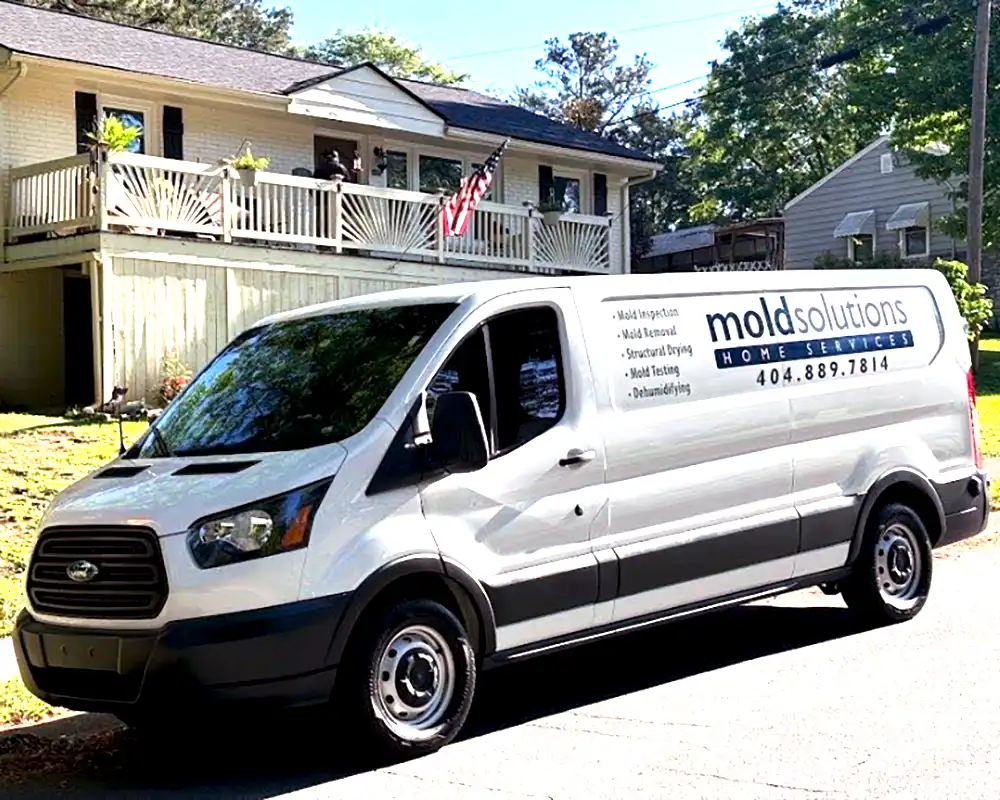
Professional Mold Remediation
Professional Black Mold Remediation Services
Black mold remediation requires more than treating the surface where mold appears. Mold grows where environmental conditions support it, particularly where building materials remain damp or indoor humidity stays elevated.
Successful remediation starts by understanding why the mold is there, how far it has spread, and what materials have been affected.
A Comprehensive Approach
From Inspection Through Restoration
Mold Solutions Home Services evaluates the mold problem, identifies contributing moisture conditions, develops the remediation scope, and completes the work appropriate to the property.
Evaluate visible growth, affected areas, and surrounding conditions.
Look for leaks, elevated humidity, water intrusion, and retained moisture.
Collect samples for third-party laboratory analysis when appropriate.
Define what needs to be contained, cleaned, removed, dried, or repaired.
Isolate affected areas when needed during remediation work.
Use filtration equipment appropriate to the conditions of the project.
Physically address mold on affected surfaces and materials.
Remove materials that cannot be appropriately cleaned or restored.
Address damp conditions that can continue supporting mold growth.
Repair affected portions of the property when restoration work is required.
Review completed work and the areas addressed during remediation.
Our certified mold remediation services follow IICRC S520 protocols for professional mold remediation.
Understanding What You See
What Is Black Mold?
“Black mold” is a general term commonly used to describe dark-colored mold found inside buildings.
While Stachybotrys chartarum is frequently associated with the term, you cannot reliably determine a mold species or its potential effects simply by looking at its color.
Different types of mold can appear black, dark green, brown, or gray. That is one reason Mold Solutions Home Services begins with a professional inspection rather than making assumptions based solely on appearance.
What mold looks like can help identify where further investigation is needed, but visual appearance alone does not provide a reliable laboratory identification.
When Testing Is Appropriate
Mold Sampling and Laboratory Analysis
When appropriate, our certified mold inspectors can collect samples for analysis by an accredited third-party laboratory.
Inspect Evaluate the property and determine whether sampling would provide useful information.
Collect Gather appropriate samples from the property when testing is warranted.
Analyze Submit samples to an accredited third-party laboratory for analysis.
Use the Results Laboratory findings can provide additional information that helps guide the remediation plan.
Laboratory testing can identify types of mold, mildew, and other microorganisms present in the submitted samples.
When to Investigate
Signs You May Need Black Mold Remediation
Visible black or dark-colored growth is an obvious reason to investigate, but mold is not always out in the open.
Consider scheduling a professional mold inspection if you notice signs of moisture, repeated mold growth, unusual odors, or water damage inside the property.
Do not wait for visible mold to appear after water damage. If you know the property has experienced flooding, a leak, or another moisture problem, addressing the moisture promptly can help reduce the conditions that support mold growth.
Hidden Mold Problems
Where Black Mold Can Grow in Your Home
Mold needs moisture, which means it commonly develops in areas affected by leaks, condensation, humidity, flooding, or other sources of water.
Some mold is easy to see. Other growth can develop behind finished surfaces, beneath flooring, inside wall cavities, or in other areas where moisture remains trapped.
A Common Hidden Location
Black Mold Behind Drywall
A plumbing leak, roof leak, exterior water intrusion, or previous water damage can leave the back of drywall and the materials inside a wall cavity damp.
Water Gets Behind the Surface Moisture enters through a leak, flooding event, or exterior intrusion.
Materials Stay Damp Drywall, insulation, wood, and other materials may retain moisture out of sight.
Mold May Extend Beyond What You See Visible growth on the wall surface may represent only part of the affected area.
Professional inspection can help determine whether moisture or mold extends beyond the exposed surface.
Common Problem Areas
Where Black Mold Commonly Develops
Mold can develop anywhere moisture remains long enough to support growth, but certain areas of a home are especially vulnerable because of humidity, leaks, condensation, or water intrusion.
Crawl Space Moisture
Black Mold in Crawl Spaces
Crawl spaces can provide favorable conditions for mold because of elevated humidity, ground moisture, plumbing leaks, condensation, and water entering around the foundation.
- Floor joists
- Subflooring
- Insulation
- Foundation surfaces
- Other structural materials
Correcting the moisture problem is an important part of keeping crawl space mold from returning after remediation.
Humidity & Ventilation
Black Mold in Bathrooms
Bathrooms regularly produce moisture, making ventilation and moisture control especially important.
Persistent condensation, poor ventilation, or plumbing leaks can keep bathroom surfaces and surrounding materials damp.
Below-Grade Moisture
Black Mold in Basements
Foundation moisture, plumbing leaks, flooding, and high humidity can all contribute to basement mold.
Finished basements can hide the problem. Mold and moisture may remain concealed behind walls, beneath flooring, or inside other enclosed areas.
Roof & Ventilation Problems
Black Mold in Attics
Roof leaks, condensation, and ventilation problems can introduce moisture into an attic and allow mold to develop on materials above the living space.
Finding the moisture source is an important part of determining how the attic mold problem should be addressed.
Water Damage and Mold
Mold Following Water Damage
Water damage and mold problems often go hand in hand.
A plumbing failure, appliance leak, storm, roof problem, sewage incident, or other water loss can leave porous materials wet long after the standing water disappears.
The surface may look dry while moisture remains inside drywall, flooring, insulation, framing, or other building materials.
A leak, flooding event, storm, sewage backup, or appliance failure introduces unwanted water.
Porous materials can absorb and retain water beyond the area where damage is immediately visible.
Materials that remain damp can create conditions that support mold growth.
Finding and drying retained moisture can be critical to preventing a manageable water problem from becoming a larger mold remediation project.
From Inspection Through Restoration
Our Black Mold Remediation Process
Every property is different, so the exact remediation plan depends on where the mold is located, the extent of contamination, the materials involved, and the source of moisture.
Mold Solutions Home Services takes the project from initial assessment through remediation and restoration with a defined scope of work for the conditions found at the property.
Step One
Mold Inspection
Confirming that remediation is necessary begins with a professional mold inspection.
Our inspector looks for visible mold as well as signs of recent or ongoing moisture. We assess affected areas and investigate conditions that may be allowing mold to grow.
Depending on what we find, sampling and laboratory analysis may be recommended.
Step Two
Mold Sampling and Testing When Appropriate
Not every mold problem requires laboratory testing. When testing can provide useful information, our certified mold inspectors collect samples for third-party analysis.
Testing can help identify the types of mold and other microorganisms present and provide additional information for developing the remediation plan.
Step Three
Determine the Scope of Work
Once we understand the mold and moisture conditions, our technicians determine the appropriate scope of work.
You receive an estimate explaining the proposed work before remediation begins.
Step Four
Contain the Affected Area
Containment helps keep contaminants from spreading into unaffected portions of the property while remediation is underway.
The exact containment strategy depends on the size, location, and conditions of the affected area.
Step Five
Air Filtration
Professional air-filtration equipment may be used during remediation to help manage airborne particles within the work environment.
Air scrubbers and other appropriate equipment support containment and help maintain controlled conditions while contaminated materials are being cleaned or removed.
Step Six
Mold Cleaning and Removal
Our technicians clean affected materials that can be appropriately remediated and remove contaminated materials when necessary.
Depending on the property, this could involve drywall, insulation, flooring, or other porous materials that cannot reasonably be restored.
The goal is not to hide mold. We address affected materials as part of a complete remediation plan.
Step Seven
Drying and Dehumidification
Removing mold without addressing moisture leaves the underlying problem unresolved.
Professional dehumidification and drying equipment can be used to remove excess moisture from the air and affected building materials.
Moisture conditions can then be monitored as the structure dries.
Step Eight
Repairs and Restoration
Mold remediation sometimes requires building materials to be removed. Once remediation and drying are complete, those areas may need to be repaired or reconstructed.
Mold Solutions Home Services handles projects from A to Z so you are not left with a clean but unfinished space.
Step Nine
Final Walkthrough
We complete a final walkthrough so you understand the work performed and the condition of the restored area.
Professional Remediation Equipment
Equipment Used During Black Mold Remediation
Professional remediation may require several types of specialized equipment depending on the conditions inside the property, the extent of contamination, and the moisture conditions that need to be addressed.
Professional Remediation Equipment
Equipment Used During Black Mold Remediation
Professional mold remediation may require specialized equipment to manage airborne particles, reduce humidity, and support structural drying. The specific equipment used depends on the conditions found at your property.
Air Filtration
Air Scrubbers
Air scrubbers provide portable air filtration during remediation. They help remove airborne particles and improve air quality within controlled work areas.
Humidity Control
Dehumidifiers
Dehumidifiers remove excess moisture from indoor air. Moist air passes across cooled coils, causing water vapor to condense so it can be collected and removed.
Humidity control is particularly important when excessive moisture contributed to the original mold problem.
Structural Drying
Air Movers
Air movers produce high volumes of controlled airflow and can support the structural drying process when their use is appropriate for the remediation environment.
Equipment is selected for the conditions of the property. The extent of contamination, moisture levels, affected materials, and remediation plan all help determine what equipment is appropriate.
Address the Underlying Problem
Why Moisture Control Matters
You can remove visible mold and still fail to solve the actual problem.
Mold growth depends on moisture. If a plumbing leak continues, a crawl space remains excessively humid, or water continues entering through the building envelope, conditions remain favorable for new growth.
A comprehensive remediation project therefore looks beyond the mold itself and investigates the conditions that allowed it to develop.
Identifying the moisture source gives you the information needed to make decisions about correcting the underlying problem.
Potential Moisture Sources
Finding these conditions helps determine what should be corrected so the property is not left with the same environment that supported mold growth in the first place.
If You Find Suspected Mold
What to Do If You Discover Black Mold
If you find a significant area of suspected mold, avoid disturbing it unnecessarily.
Scrubbing, tearing out contaminated materials, or blowing air directly across the area can potentially move particles into other parts of the property.
Limit access to the area. Keep children, pets, and unnecessary foot traffic away from the affected space.
Stop active water if it is safe to do so. Address a leak or water source without disturbing the mold.
Arrange a professional inspection. Determine the extent of the problem before attempting removal.
Need help with suspected black mold?
Talk With Mold Solutions Home Services 404-889-7814 Tell us what you are seeing, where the problem is located, and whether the property has experienced a leak or other water damage.Avoid Common Shortcuts
What Not to Do With Black Mold
Avoid shortcuts that conceal the problem without addressing its cause.
Professional inspection can help determine what you are actually dealing with and what remediation is appropriate.
Homes and Businesses
Black Mold Remediation for Residential and Commercial Properties
Residential Black Mold Remediation
Mold Solutions Home Services provides black mold remediation for homeowners throughout Cobb County, Paulding County, and surrounding areas.
We can investigate mold concerns involving:
From inspection through the final walkthrough, we focus on keeping you informed about what we find, what needs to happen, and why.
Commercial Black Mold Remediation
Mold does not only affect homes. Leaks, humidity, roof problems, plumbing failures, and previous water damage can create mold problems in commercial buildings as well.
Mold Solutions Home Services provides commercial mold inspections and remediation for businesses and property owners throughout our Metro Atlanta service area.
Our CCMI credentials support our ability to assess mold concerns in commercial environments and develop an appropriate scope of work.
Professional Standards
Certified Mold Inspection and Remediation
Mold Solutions Home Services maintains professional certifications related to mold inspection and remediation.
Professional standards matter because remediation involves more than applying a cleaner. The process requires understanding moisture, contamination, containment, removal, drying, and restoration as parts of the same problem.
Our certified mold remediation work follows IICRC S520 protocols.
Certified Residential Mold Inspector Professional training related to residential mold inspection.
Certified Mold Remediator Professional training related to mold remediation practices.
Certified Commercial Mold Inspector Mold inspection training focused on commercial environments.
Mold Remediation Protocols Training and procedures that support a structured remediation process.
When a Claim Is Involved
Black Mold Remediation and Insurance Claims
When mold develops following a water-loss event, insurance may become part of the restoration process. Coverage depends on your individual policy and the circumstances that caused the damage.
Mold Solutions Home Services works with homeowners, insurance carriers, and adjusters to maintain communication between the parties and help move the restoration process forward.
Clear project documentation. We provide a scope of work and estimate so you have documentation explaining the work associated with the project.
Local Mold Remediation
Black Mold Remediation in Cobb, Paulding and Surrounding Counties
Mold Solutions Home Services is based at 160 Owens Road in Dallas, GA, and provides mold removal and remediation throughout the surrounding Metro Atlanta area.
Paulding County
Dallas, Hiram, New Georgia, New Hope and surrounding communities.
Cobb County
Powder Springs, Marietta, Kennesaw and surrounding communities.
Douglas County
Douglasville, Winston, Villa Rica, Mirror Lake and surrounding communities.
Bartow County
Cartersville, Adairsville and surrounding communities.
We also serve additional communities throughout the Metro Atlanta area. Call us to confirm service availability for your property.
One Call Starts the Process
Getting Help Is as Easy as Picking Up the Phone
When you discover a mold problem, you should not have to figure out the remediation process by yourself.
Mold Solutions Home Services can take the project from the initial inspection through remediation, drying, restoration, and the final walkthrough.
A site inspection for an emergency mold problem may be available in 45 minutes or less.
Our Process
Call us about the mold problem.
We inspect the property and evaluate the affected areas.
Our technicians identify the appropriate scope of work.
You receive an estimate explaining the proposed work.
After your approval, we begin the project.
We provide the scope of work and communicate throughout the project.
When insurance is involved, we coordinate communication with you, your carrier, and your adjuster.
We complete the remediation and restoration included in the project.
We conduct the final walkthrough with you.
We want you to have a restored property where the conditions contributing to the mold problem have also been addressed.
Common Questions
Black Mold Remediation FAQs
Answers to common questions about mold inspection, black mold removal, moisture control, remediation, testing, and insurance.
What is black mold remediation?
Black mold remediation is the process of assessing mold contamination, identifying contributing moisture conditions, containing the affected area, removing or cleaning contaminated materials, drying the structure, and completing necessary restoration. The exact process depends on the extent and location of the mold.
Is black mold the same as Stachybotrys?
Not necessarily. Stachybotrys chartarum is commonly called black mold, but many molds can appear black or dark in color. Appearance alone is not a reliable way to identify a mold species. Laboratory analysis can identify mold types when testing is appropriate.
How do I know if I need black mold remediation?
Visible mold, recurring mold, musty odors, water damage, leaks, damp building materials, and persistent humidity can all justify further investigation. A professional mold inspection can determine the extent of the problem and whether remediation is appropriate.
Can black mold grow behind drywall?
Yes. Moisture from plumbing leaks, roof leaks, condensation, or exterior water intrusion can affect wall cavities without producing an immediately obvious problem on the finished surface.
Does moldy drywall need to be removed?
It depends on the extent of contamination and condition of the material. Some porous materials cannot be effectively restored and may need to be removed as part of remediation. The remediation scope should be based on the conditions found during inspection.
Can I remove black mold myself?
Small amounts of surface mold may be different from a significant contamination problem. Larger areas, recurring mold, hidden contamination, and mold associated with substantial water damage can require professional containment, removal, filtration, and drying procedures.
Does bleach kill black mold?
Using bleach is not a substitute for determining why mold is growing or whether contaminated materials need to be removed. Successful remediation focuses on the affected materials, extent of contamination, and underlying moisture conditions rather than simply applying a household cleaner.
Can I paint over black mold?
Painting over mold does not correct the underlying contamination or moisture source. Mold should be properly addressed and affected materials should be clean and dry before restoration work is completed.
How long does black mold remediation take?
The timeframe depends on the extent of mold growth, location of contamination, amount of material requiring removal, moisture conditions, drying requirements, and necessary repairs. An inspection allows us to develop a more accurate scope and estimate.
Can black mold return after remediation?
Mold can grow again when moisture problems return or remain unresolved. That is why moisture identification, drying, humidity control, and correction of water sources are important parts of a comprehensive remediation strategy.
Does homeowners insurance cover black mold remediation?
Coverage varies based on the insurance policy and cause of the mold problem. Mold associated with certain covered water losses may be handled differently from mold caused by long-term moisture conditions. Review your policy and speak with your insurance carrier about your specific loss.
What happens during a professional mold inspection?
An inspector examines the property for visible mold, moisture damage, and evidence of ongoing or previous water intrusion. Depending on the findings and circumstances, mold sampling and third-party laboratory testing may also be recommended.
How quickly should I address mold after water damage?
Water-damaged materials should be addressed promptly. The longer materials remain wet, the greater the opportunity for microbial growth and additional property damage. If you have experienced significant water damage or already see mold, contact a professional as soon as possible.
Do you provide black mold remediation in Cobb and Paulding Counties?
Yes. Mold Solutions Home Services provides mold inspection, removal, and remediation throughout Cobb County, Paulding County, Douglas County, Bartow County, and surrounding Metro Atlanta communities.
How do I get an estimate for black mold removal?
Call 404-889-7814. Mold removal estimates are available at no charge. After assessing the situation, we can determine the appropriate scope of work and provide an estimate for your remediation project.
Mold Inspection • Remediation • Restoration
Call for Black Mold Remediation
If you have found black mold, experienced water damage, or suspect mold is growing somewhere you cannot see, get the property inspected before the problem has more time to develop.